Keepers of the Threshold:Containment, Individuation and The Art of Seeing.
Carl Jung’s last book: “Man and His Symbols” delves into the individual psyche. My initial expectation of the book was that it would be about archetypes and their meaning. Instead, his book delved into the individual personal dreams, archetypes, experiences, the animus and anima and their symbolic meaning for that individual.
Meaning then is not universal; it is formed through personal experience, association, context and the collective beliefs and unconscious.
Our world is controlled by our subconscious, our minds are not under our control and the moment we realize this we begin to see and hear the symbolic messages and meaning those messages have for us. Our minds need meaning to make sense of our lives. We must stop reducing life to productivity and begin approaching it as a domain worthy of sustained inquiry.
“One who looks outside-dreams; one who looks inside-awakes” ~unknown
Luke 17:21 whispers through Jung’s insight: ‘The kingdom of God is within you.’ This biblical phrase amplifies the essay’s opening claim that reality is not only external but also interior—a resonance that frames individuation as sacred geography.
Jung’s book makes it very clear that interpretation is complex and there is no single way to decode a symbol or dream because everyone comes with a set of beliefs, experiences and their unconscious program running. One must do the work to decode it for themselves.
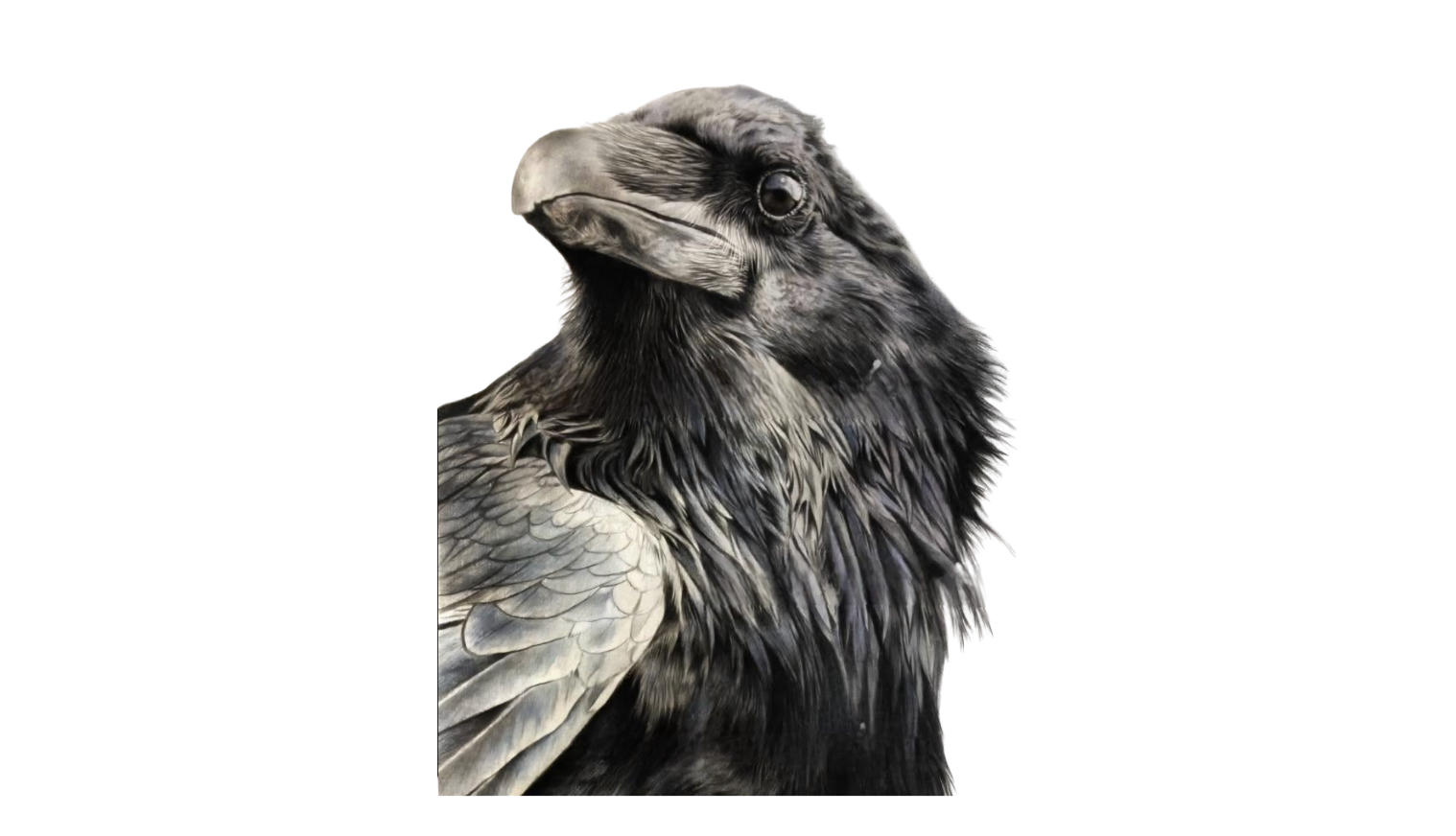
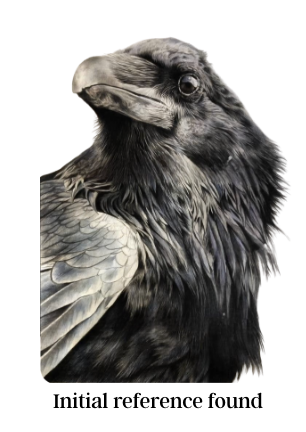
While reading “Man and His Symbos,” I saw in my mind’s eye a crow poised before a luminous moon. The image arrived with the feeling of a messenger at a gate: The crow stands at the threshold of darkness, where understanding arrives in the quiet guise of solitude. The moon bathing that darkness in a gentle, receptive light. Through Jung’s framework, this vision speaks to the encounter between the ego and the unconscious, and to the archetypal forces that mediate their dialogue.
Matthew 13:15 deepens the awakening theme: ‘Seeing they do not see…’ Symbolic blindness mirrors the ego’s resistance to unconscious material, making the crow’s arrival a corrective gesture—a call to sight beyond surface.
Jung described the anima (the feminine dimension of a man’s psyche) and the animus (the masculine dimension of a woman’s psyche) as contra‑sexual archetype
Inner figures that mediate between conscious life and the unconscious. They appear in dreams, fantasies, and symbolic imagery as emissaries of what has not yet been recognized, introducing unfamiliar feelings, perspectives, and latent potentials into awareness. In this sense, the crow and moon operate as complementary facets of that mediation: the crow draws consciousness downward toward shadowed content, while the moon receives and reflects what rises into view, allowing it to be felt rather than dominated.
“Be transformed by the renewing of your mind” (Romans 12:2) becomes a hinge between Jungian psychology and biblical wisdom.
In both traditions, inner change precedes outer coherence. Transformation is not imposed externally; it arises through sustained interior attention.
“Be transformed by the renewing of your mind” (Romans 12:2) becomes a hinge between Jungian psychology and biblical wisdom. In both traditions, inner change precedes outer coherence. Transformation is not imposed externally; it arises through sustained interior attention.
The crow, black‑winged and keen‑eyed, aligns with the archetype of the shadow—the unowned, repressed, or denied aspects of the self. In alchemical language, this descent corresponds to nigredo, the necessary darkening in which rigid identifications dissolve before renewal can occur. As a psychopomp, the crow belongs to a long lineage of guides—Hermes, Anubis, Valkyries, angels, ravens—figures who escort consciousness across thresholds between worlds. Its unsettling presence does not threaten destruction; it summons courage. Intelligence and adaptability mark the crow as a bearer of insight, revealing that the shadow is not merely a repository of fear but a reservoir of untapped vitality awaiting integration.
As I continued reading and within this symbolic field, the owl emerges as part of my art project to accompany my crow with moon; as Sophia—not information or cleverness, but a form of wisdom that arrives through stillness, pattern recognition, and patience. Her gaze is discerning without aggression, her presence orders without dominating.
Placed before the moon, the crow and owl are illuminated without being diminished. Mystery is preserved even as visibility increases. These figures enact a central Jungian task: to encounter the shadow without collapse or domination. The crow draws consciousness toward what has been disowned, standing ready at the threshold.